The Tiles of American Mah Jongg
An American Mah Jongg set has 152 tiles. Learning to tell them apart at a glance is the first real step in the game: once you stop reading each tile, you start seeing groups, and that is when you begin to plan a hand. The pictures on this page are the tiles you play with in Daily Mah Jongg, where every tile also carries a small number or letter in its corner to help while you learn.
What’s in a set
- Bams — numbered 1 to 9, four of each: 36 tiles.
- Craks — numbered 1 to 9, four of each: 36 tiles.
- Dots — numbered 1 to 9, four of each: 36 tiles.
- Winds — North, East, West and South, four of each: 16 tiles.
- Dragons — Red, Green and White, four of each: 12 tiles.
- Flowers — 8 tiles.
- Jokers — 8 tiles.
Add them up and you get 152. The number to remember is four: apart from flowers and jokers, there are exactly four copies of every tile in the set.
The three suits
Most of the set is made of three suits, each running from 1 to 9. The suits work the same way; only the pictures differ.
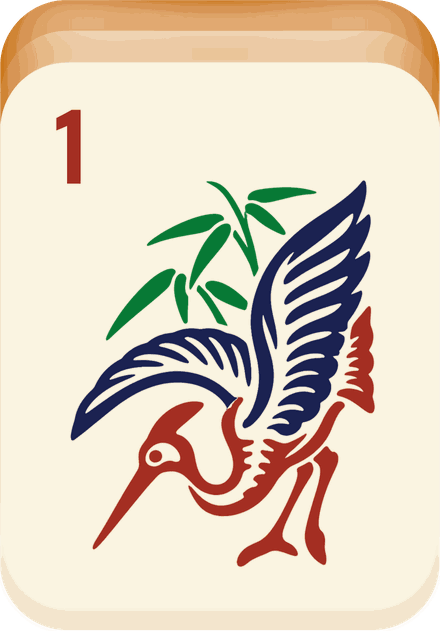
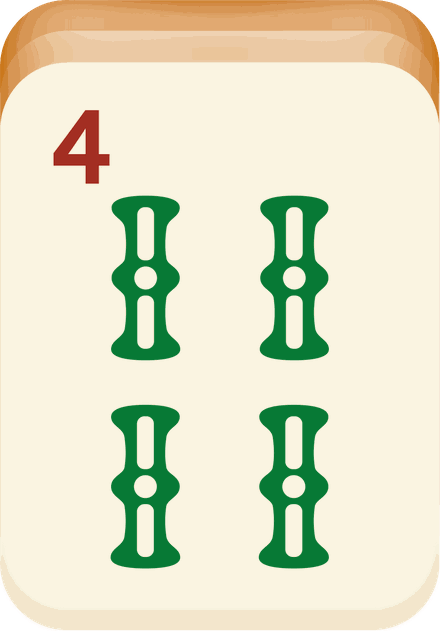
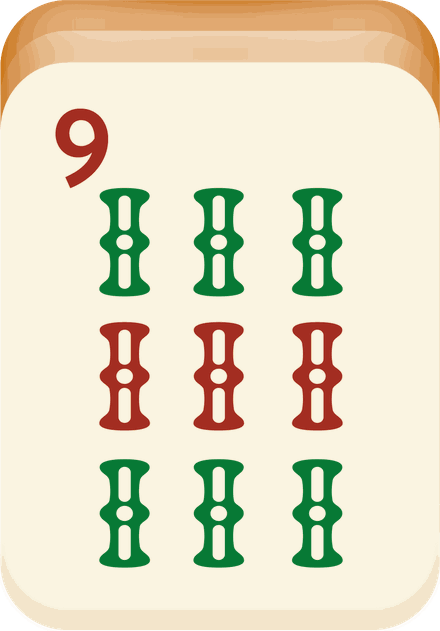
Bams (short for bamboo) show green and red sticks of bamboo. The 1 Bam is the odd one out: it is traditionally drawn as a bird rather than a single stick, which surprises almost every new player.
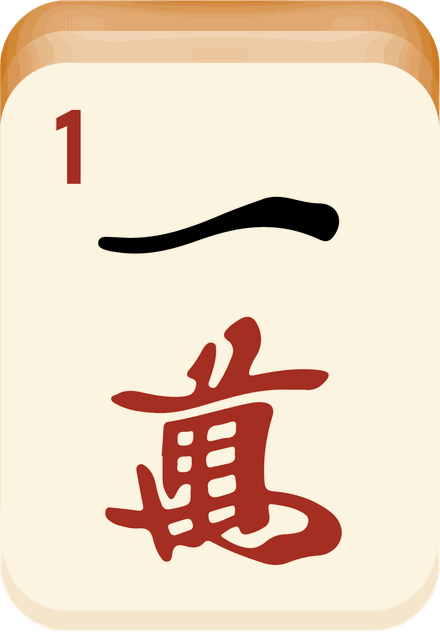
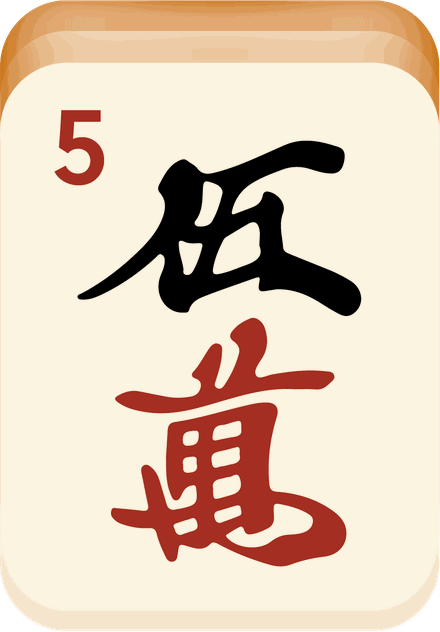
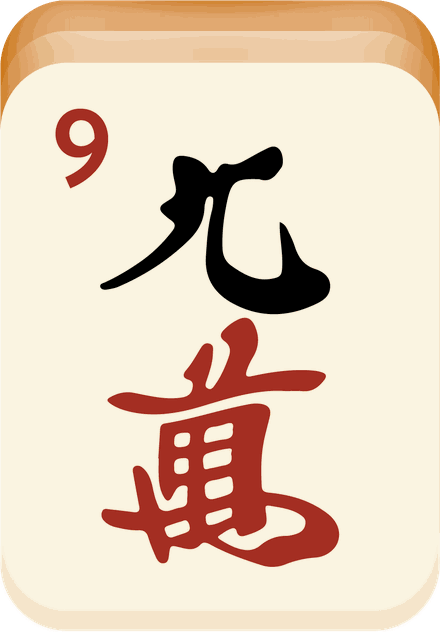
Craks (short for characters) show two Chinese characters: a number on top and, underneath, the character for “ten thousand.” You don’t need to read Chinese to play — the bottom character is the same on every Crak, so look at the top one, or at the number in the corner.
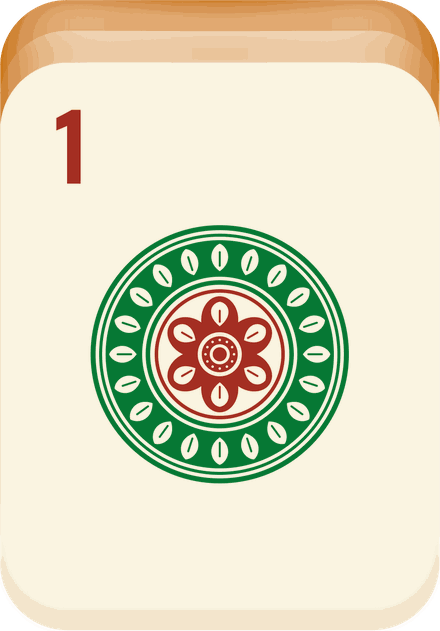
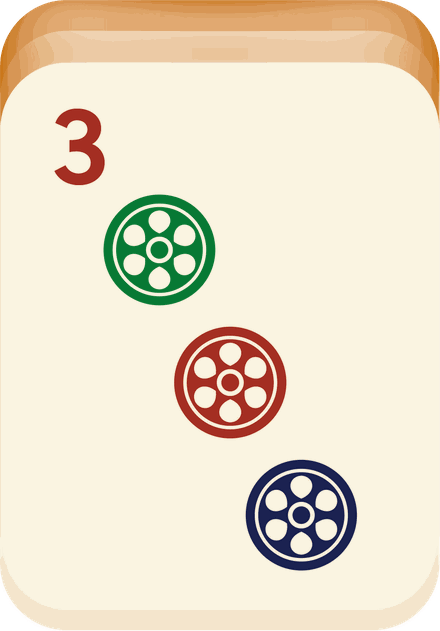
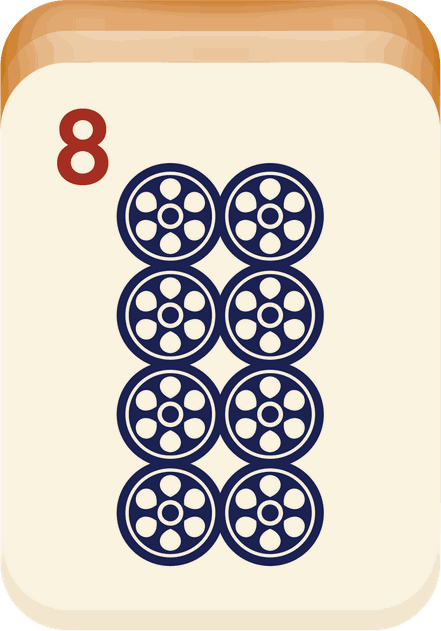
Dots show circles, one to nine of them. Counting the circles works for the low numbers; for the high ones, learn the patterns they make.
Winds
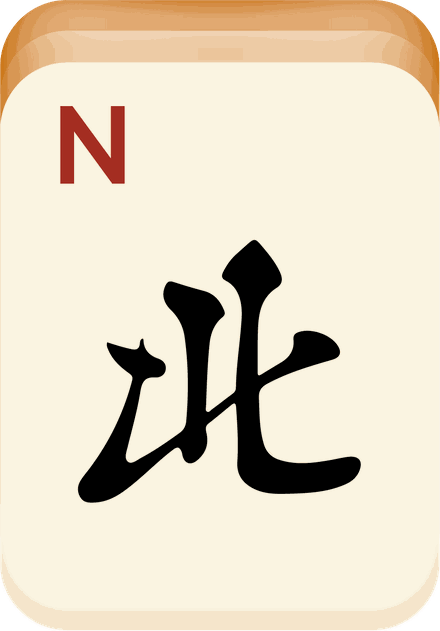
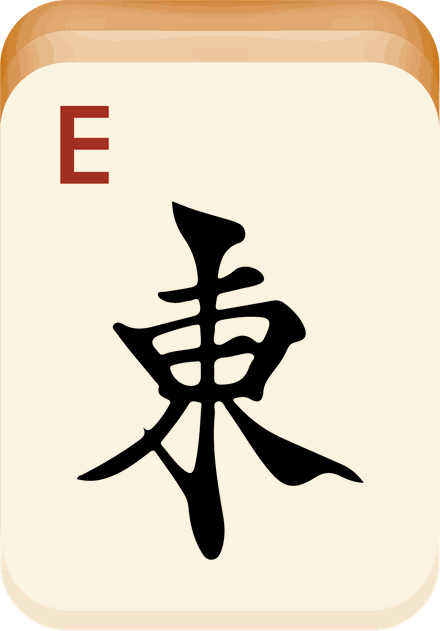
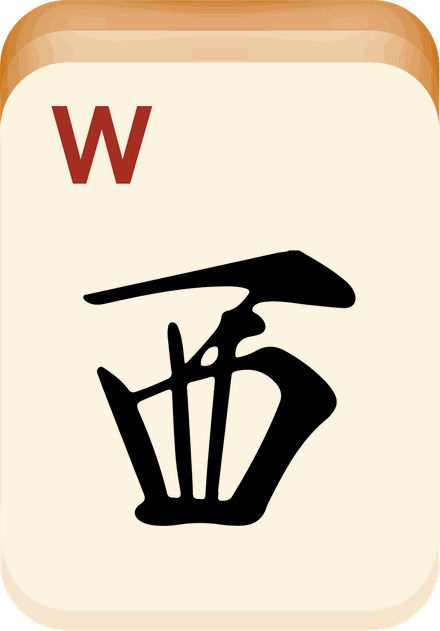
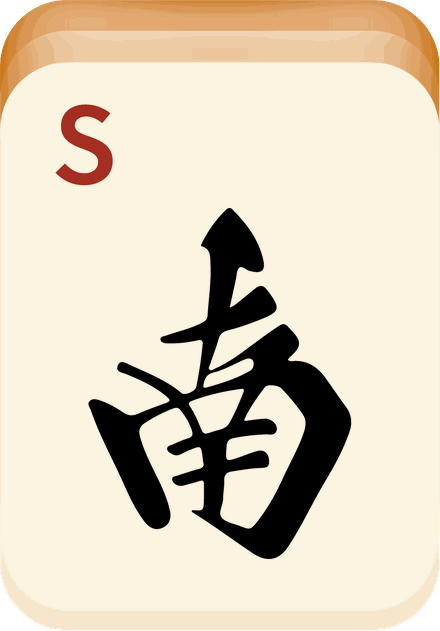
There are four winds — North, East, West and South — with four of each. They belong to no suit and carry no number. The seats at the table are named for the winds too. East is the dealer: East starts with 14 tiles instead of 13 and makes the first discard.
Dragons
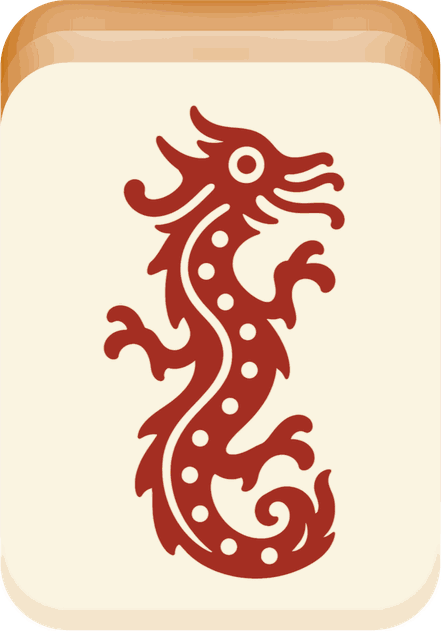
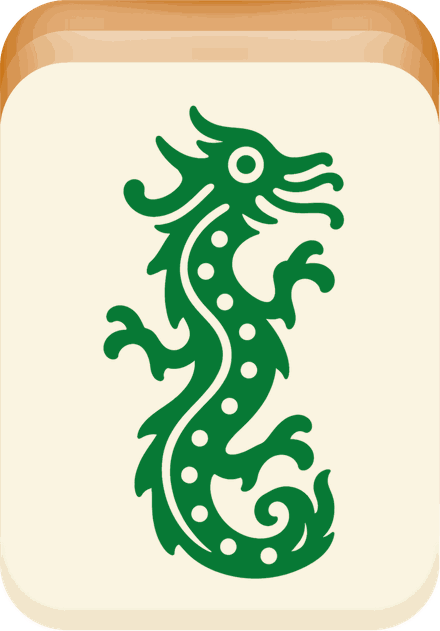
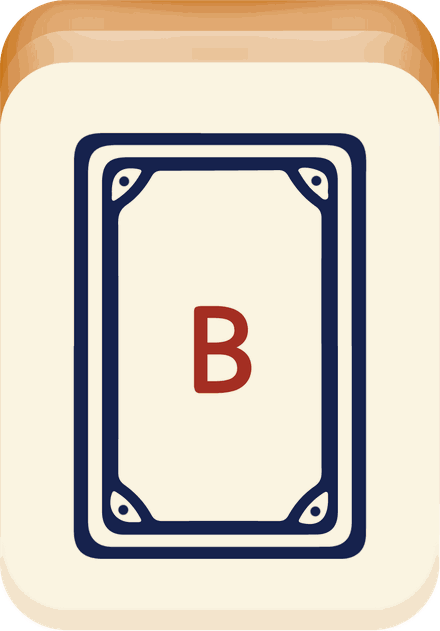
There are three dragons — Red, Green and White — with four of each. The White Dragon is a plain framed tile, and players often call it Soap, after its look.
Each dragon goes with one suit: Red with Craks, Green with Bams, and White with Dots. This matters when you read a hand. A hand may ask for a suit together with its own dragon, or for a dragon that belongs to a different suit from the numbers beside it, and the colors on the card tell you which. Soap has one more job: in hands that spell out a number, it stands for a zero.
Flowers
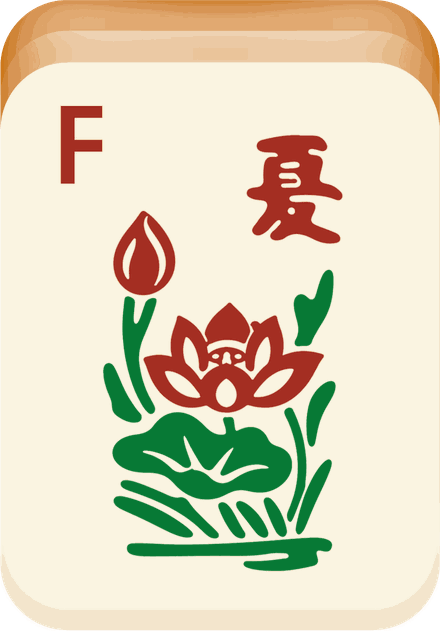
A set has eight flowers. Physical sets often decorate them differently — flowers and seasons, different pictures, numbers in the corner — but in American Mah Jongg every flower is the same tile. Any flower can go with any other.
Because there are eight of them, flowers are the one tile you can hold more than four of without help from a joker.
Jokers
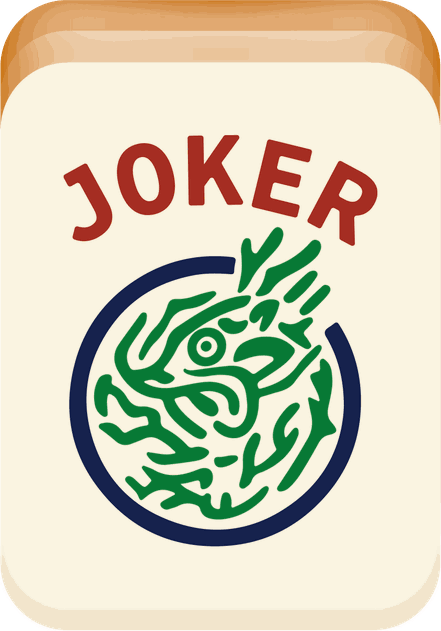
Jokers are what make American Mah Jongg different from the other versions of the game. A set has eight, and each one can stand in for any tile in a group of three or more matching tiles.
- A joker can never be a single tile or part of a pair.
- Jokers can never be passed in the Charleston.
- If a group on the table shows a joker and you hold the real tile it stands for, you may trade your tile for that joker on your turn.
- A discarded joker is dead: no one can call it.
Since a joker can become almost anything, it is the most valuable tile you can hold. Throwing one away is a big decision, usually made only late in a game.
Names for groups
Players use a few short words for groups of matching tiles:
- Single — one tile.
- Pair — two of the same tile. No jokers allowed.
- Pung — three of the same tile.
- Kong — four of the same tile.
- Quint — five of the same tile.
- Sextet — six of the same tile.
The count of four explains the bigger groups. There are only four of any numbered tile, wind or dragon, so a quint of 7 Dots needs at least one joker, and a sextet needs at least two. Flowers are the exception again: with eight in the set, five flowers can be all real tiles.
Using the count while you play
Knowing there are four of each tile is useful in every game. Before you set your heart on a group, look at what is already out: in the discards and in the groups your opponents have placed face up. If three 6 Dots have been thrown away, only one is left, and you will need jokers to build a pung of them. The same count tells you which of your own discards are safe: a tile that already has three copies showing is unlikely to finish anyone’s group.
Buying a set
If you play at a real table, a set built for American Mah Jongg will include the jokers, which sets made for other versions of the game may not. Many sets also come with a few blank spare tiles. Some tables use those under house rules, so agree on them before you start.
Next
Back to How to Play for the basics of a turn, the Charleston, calling a discard and winning.